
WHAT IS NEUROVISION?
Notre unité d’orthoptie est dédiée à l’évaluation, au diagnostic et à la prise en charge des troubles neurovisuels dans le cadre de difficultés d’apprentissage. Spécialisés dans le domaine de la neurovision, nous mettons à disposition des approches innovantes et personnalisées pour répondre aux besoins spécifiques des patients, enfants comme adultes.
Neurovisual disorders are cognitive dysfunctions caused by a permanent disorder in the cerebral processing of visual information.
Dans le grand groupe des « dys », nous allons nous intéresser particulièrement à la dyspraxie qui va être le dysfonctionnement principalement impliqué dans les troubles neurovisuels. La dyspraxie est un trouble spécifique du développement moteur et de la coordination motrice.
We also help children with learning difficulties such as dyslexia, dysorthographia, dysgraphia, attention deficit disorders (ADHD) and difficulties with hand-eye coordination.
In practical terms, these children may have difficulty learning to read and write at school, and they may also have problems with their representation of space.

WARNING SIGNS
- Slowness in school activities, but not outside.
- Fatigability with deterioration over time.
- Problems with reading: skipping words or lines, resulting in jerky, slow and attention-consuming reading, syllable inversion, comprehension problems.
- Copying problems: skipping letters, words or lines, reversing or omitting letters.
- Problems with organisation in space: finding one's way around a page, alternating between the blackboard and a page, difficulties with line spacing.
- Difficulties with bimanual and visuomotor coordination and cutting.
- Spelling problems: difficulty remembering the whole word.
- Writing problems: sloppy handwriting, difficulty keeping on the line, pen grip, difficulty with certain lines, extreme tiredness.
- Geometry problems: difficulty in reproducing a figure, connecting points, taking precise measurements, using a ruler or compass, differentiating 3D figures.
- Better oral than written performance.
- Headaches.
- Watery eyes.
- Bad posture.

A HUMAN AND INNOVATIVE APPROACH
Our team places the patient at the heart of its work, using modern techniques (virtual reality, oculomotor training, digital tools) and a global approach. We also work closely with families and teachers to optimise results and meet the child's needs as closely as possible.
Our service offers :
- Complete and specialised orthoptic assessment
- Adapted neurovisual rehabilitation
- Support for visual-attention and visuo-spatial disorders
- Personalised, multi-disciplinary follow-up in conjunction with other health professionals (neuropsychologists, speech therapists, occupational therapists, ophthalmologists, etc.)
Orthoptists
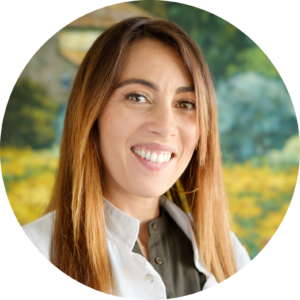
Laurianne Ravi
Orthoptist
Head of the neurovision unit
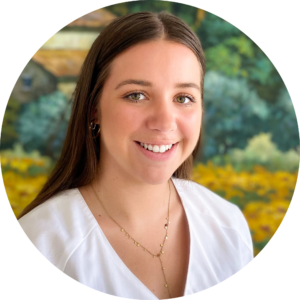
Julie Leblond
Orthoptist
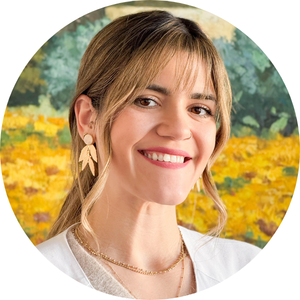
Andreia Tavares
Orthoptist
Testimonials
We noticed a big improvement in reading after just a few sessions. Today, after a year, I can see and say that our son's progress in reading and in all subjects at school has moved up a gear. His eyes are less tired at the end of the day and, above all, he has become independent at school.
I've noticed that since your sessions, Angelina has made a big improvement in her reading, and her handwriting is starting to become clearer and more legible. What's more, she's doing her exercises more quickly and logically. She tires less during school hours and with homework, and Angelina complains less of migraines.
Neurovision has helped me a lot. When I was a child, I remember not being as fast as my classmates. I couldn't read at the speed required for my age. But now I can finally read at an average speed and I enjoy reading more and more. When I go to my neurovision sessions, I tell myself that it's so that I can improve.
Thanks to you, I've started to enjoy reading; above all, I understand reading and writing better.
The benefits of orthoptics for my daughter Morgane:
- I notice less fatigue when reading.
- She is better able to follow a text without skipping a line, and reading is more fluid.
- Easier to find her way around a map.
- She has less difficulty with mathematical reproductions of shapes, such as symmetry and rotation.